


Classiq 1.0


From Progress to Practice
For years, quantum progress has been measured in qubits, papers, and demos. Hardware has advanced rapidly, but it’s only part of the story. The harder challenge is turning that progress into quantum software teams can actually build, verify, and run.
At Classiq, our customers are showing us every day, quantum computing is entering a new phase. Teams are no longer being asked whether something is theoretically possible. They are being asked to build systems that work under real constraints: correctness, cost, repeatability, and scale. That shift marks the beginning of quantum’s engineering era.
From the start, our vision has been to help organizations turn quantum ideas into real, working software, not stop at isolated experiments. That means moving beyond one-off proofs of concept toward foundations teams can trust, extend, and operate over time.
What “1.0” Means at Classiq
Classiq 1.0 is not a single feature release. It is the point where everything we’ve delivered over recent development cycles comes together into a stable, production-ready baseline.
Over the past years, we introduced major advances across language expressiveness, compiler correctness, execution, visualization, and developer experience. With 1.0, we unify those capabilities, harden them, and stand behind them as a foundation teams can build on with confidence, using AI-driven guidance throughout the platform to help translate intent into correct, optimized quantum models without sacrificing transparency or control.
This release reflects how we see our role in the ecosystem. Classiq 1.0 establishes an engineering baseline for quantum software development, one that prioritizes correctness by default, end-to-end workflows, and long-term stability. It is designed for teams that are serious about building quantum software that lasts.
What Classiq 1.0 Unlocks
Taken together, Classiq 1.0 changes what teams can expect from quantum software development.
Faster progress without sacrificing correctness. Automatic enforcement of core rules removes manual bookkeeping and reduces late-stage surprises.
- Continuity from intent to execution. Work can start with classical logic and domain expertise and carry through modeling, optimization, and execution without rewrites.
- Adaptation as hardware evolves. Models respond to changing hardware constraints while preserving logical intent.
- Execution as part of development. Running, analyzing, and iterating are integrated, not treated as fragile handoffs.
- Transparency at scale. Visibility and inspection make complex quantum programs easier to understand, debug, and explain across teams.
Just as importantly, Classiq 1.0 makes quantum work more repeatable and durable. Instead of one-off programs, teams can build quantum models that are easier to understand, reuse, and evolve over time. That shift supports a move from isolated development toward production-oriented quantum software practices.
This is what production-ready quantum software looks like in practice.
From Classical Logic to Quantum Execution
Quantum software engineering doesn't begin as a quantum problem. It starts with classical logic, domain expertise, constraints, and objectives that already exist inside organizations.
Our vision has always been to bridge that reality with quantum execution. Quantum software engineering means connecting classical problem definitions and control flow directly to quantum models and algorithms, and carrying that intent all the way through optimization and execution on real hardware.
Classiq 1.0 provides a continuous path from classical intent to quantum execution. Classical constructs and control logic are first-class citizens in our platform, not scaffolding that gets discarded along the way. Quantum models remain connected to the logic and constraints that define the problem, even as they adapt to different hardware backends.
This continuity is essential. It allows classical and quantum computing to work together as a single system, and it enables teams to move beyond isolated experiments toward production-oriented quantum development. That is the future we are building toward, and Classiq 1.0 is the baseline that makes it possible.
Correct-by-Construction, Automatically
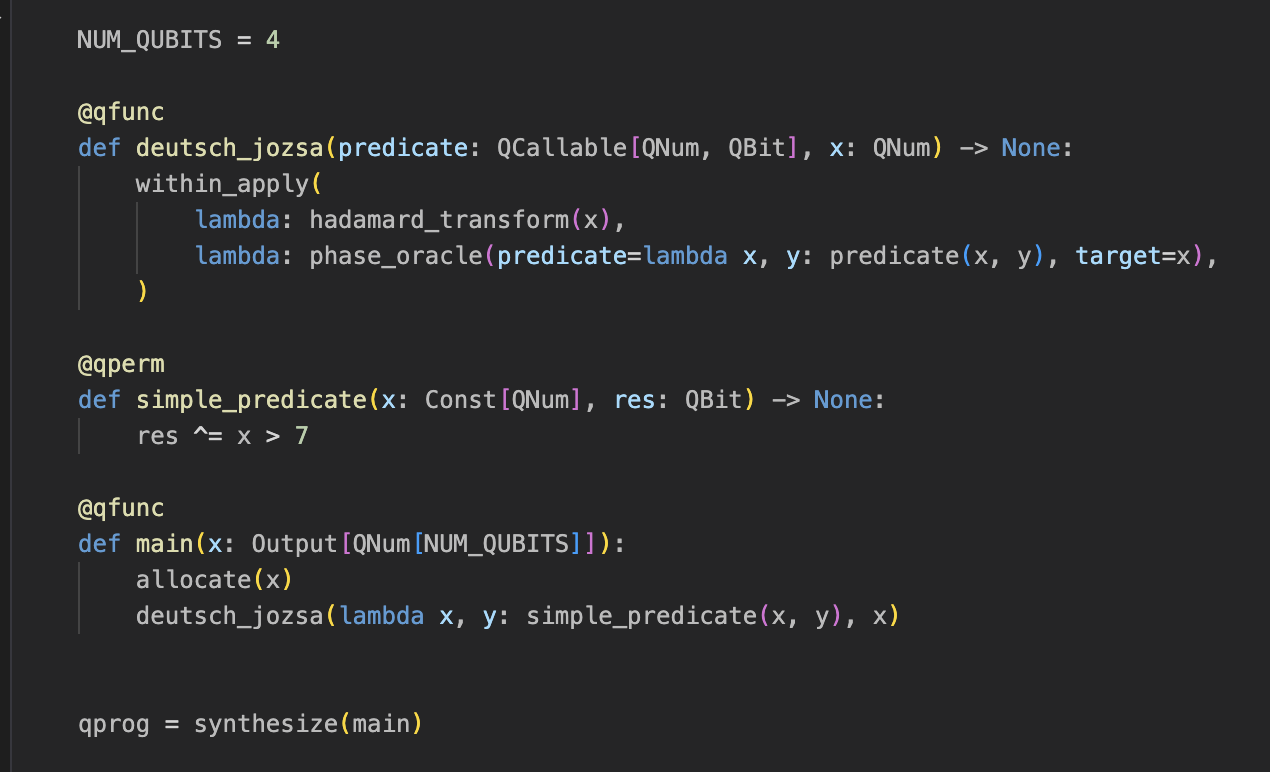
Production software demands correctness by design. Quantum software is no different, but correctness has traditionally come at a high cost: manual bookkeeping, fragile conventions, and bugs that only surface late in the process.
With Classiq 1.0, we made a deliberate shift. Correctness is enforced at the platform level and handled automatically wherever possible. Uncomputation is applied by default, local variables are cleaned up automatically, and violations are no longer treated as warnings that can be ignored. They are surfaced as hard errors that must be resolved before execution.
This change is not only about being stricter. It is about improving the developer experience. By formalizing uncomputation semantics and enforcing them consistently, Classiq removes an entire class of subtle bugs and manual cleanup work. Developers spend less time reasoning about low-level correctness details and more time focused on the algorithm and the problem it is meant to solve.
The result is quantum software that is safer, more predictable, and easier to evolve over time, without placing additional burden on the developer.
An Expressive Language for Real Problems
As quantum software moves closer to production, the gap between toy examples and real-world problems becomes impossible to ignore. Real problems require classical logic, conditional behavior, structured data, and reusable building blocks.
Classiq 1.0 significantly expands the expressiveness of Qmod to meet those needs. Classical local variables, runtime conditionals, and mid-circuit measurements allow quantum programs to reflect real decision logic. Rich assignment semantics, including arrays and in-place updates, make it possible to work with structured data naturally. Built-in modular arithmetic functions provide core primitives that many algorithms rely on, without forcing teams to reimplement them from scratch.
We also extended quantum functions with generative capabilities. Developers can use familiar Python control flow, leverage third-party libraries, and debug their code in ways that feel natural to modern software development. At the same time, bidirectional conversion between Qmod and QASM ensures interoperability with the broader quantum ecosystem.
Together, these capabilities reduce friction between intent and implementation. Quantum programs become clearer, more maintainable, and better aligned with how engineers actually build software.
Visibility, Transparency, and Debugging
As quantum programs grow in size and complexity, visibility becomes critical. If teams cannot see how a program is structured, how logic flows, or how components interact, trust breaks down and scaling becomes difficult.
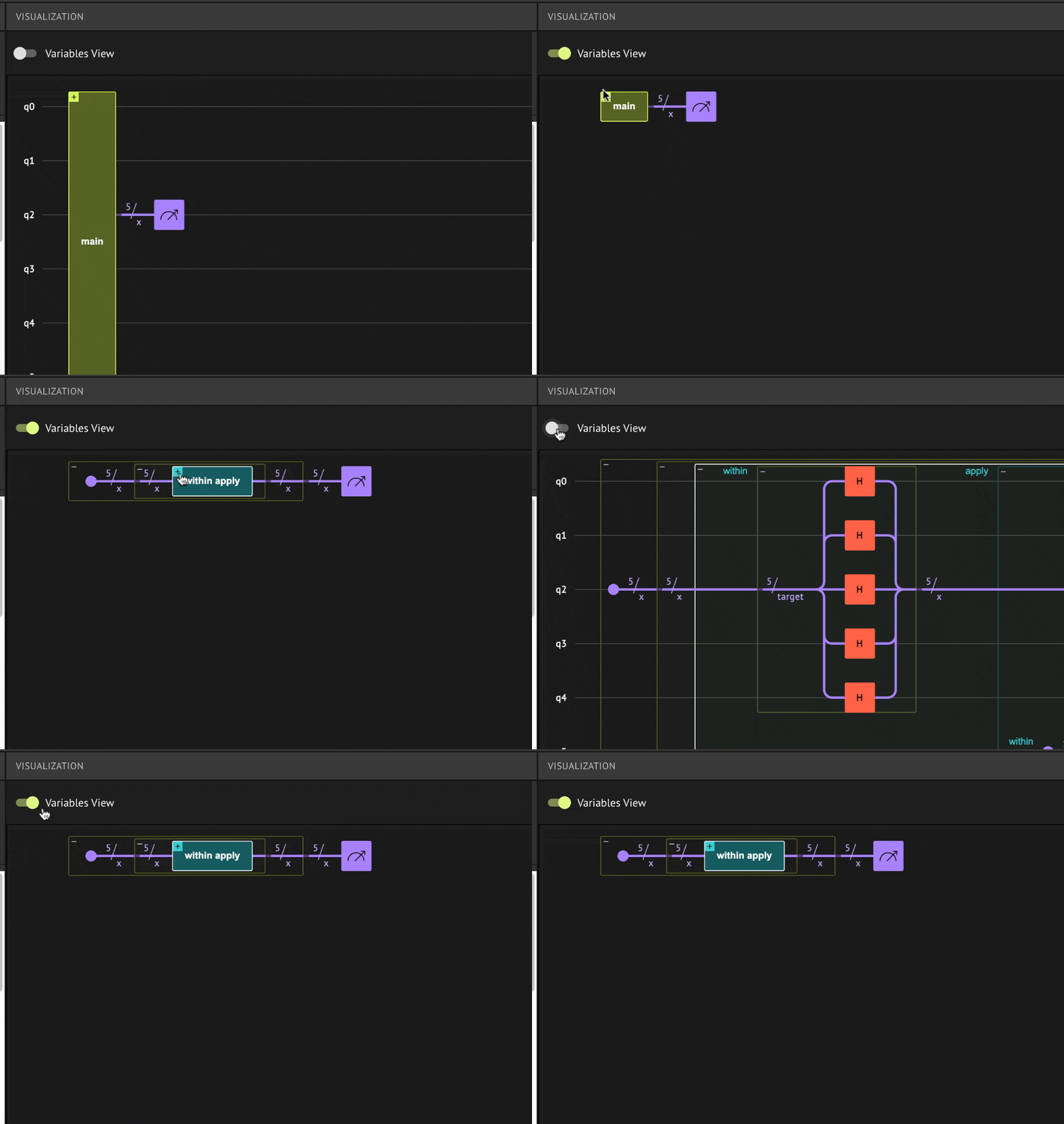
Classiq 1.0 introduces deeper transparency across the entire model. Developers can visualize Qmod statements, control structures, and transparent blocks, making it clear how high-level logic maps to the generated quantum program. Variable-level inspection and model-based views provide insight into how data and state evolve throughout execution.
All of this is available directly inside Classiq Studio, connecting high-level intent to low-level realization without forcing developers to jump between tools or representations.
By making quantum programs inspectable rather than opaque, Classiq helps teams debug faster, explain their work more easily, and build confidence in the systems they are creating.
Hardware-Aware Execution Across Simulators and QPUs
As quantum hardware continues to evolve, production software cannot afford to be tightly coupled to a single target. Models need to adapt as hardware changes, without forcing teams to redesign or rewrite their work.
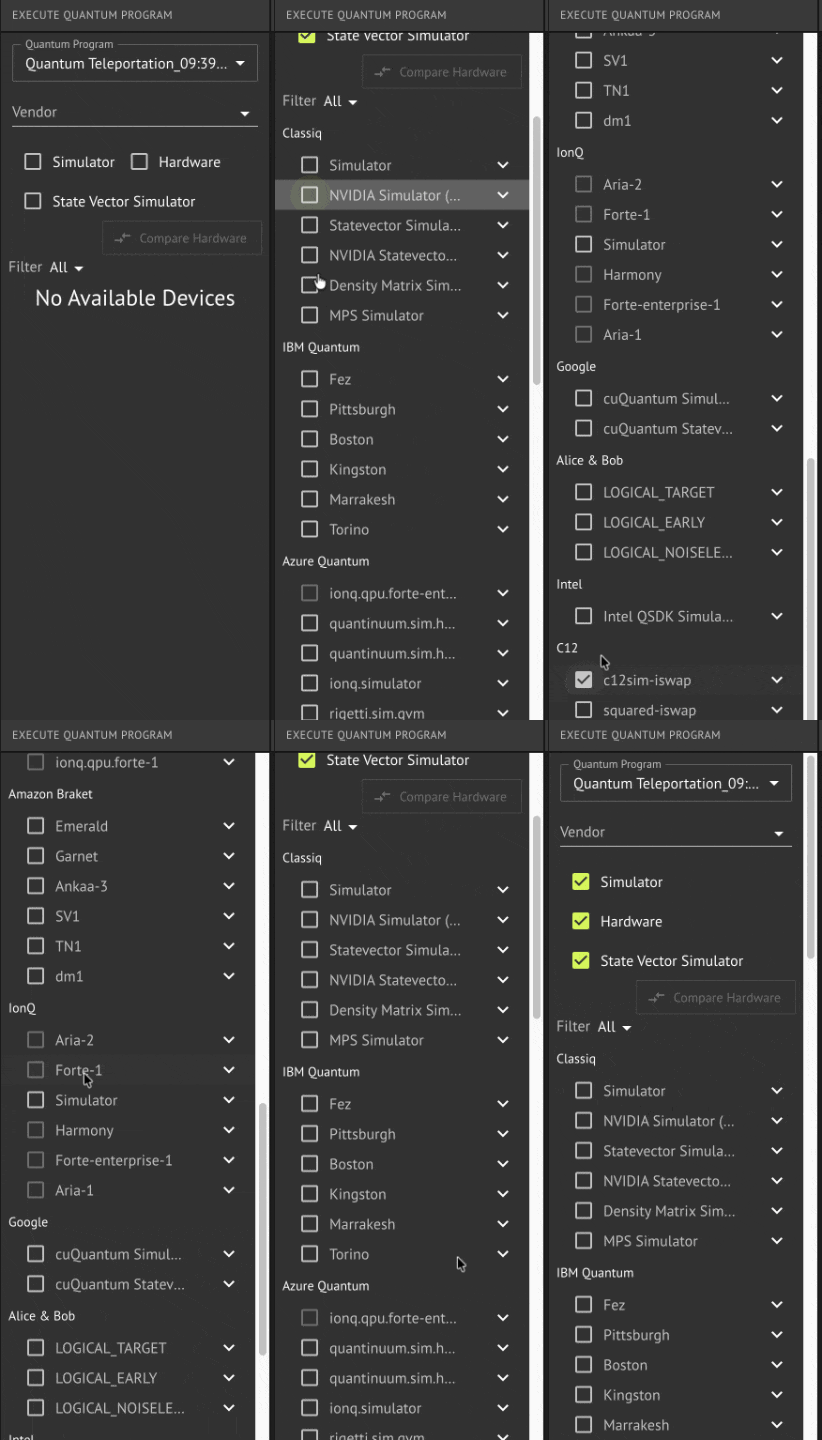
In Classiq 1.0, execution is both hardware-aware and hardware-agnostic by design. When teams switch between simulators, QPUs, or HPC environments, the underlying model updates automatically to reflect the constraints and capabilities of the selected hardware. Optimization adapts transparently, while the logical structure of the model remains intact.
Execution is integrated directly into the development workflow. Teams can run models with a single action, track and limit execution costs, and move between simulators and hardware providers without leaving the platform. GPU-based simulators support hybrid and performance-intensive workflows, while HPC deployments extend execution to large-scale environments.
This approach allows teams to focus on building and improving models, rather than managing hardware-specific rewrites. The same quantum program evolves alongside the hardware it runs on, preserving intent while adapting to reality.
Classiq Studio: Quantum Engineering, Anywhere
Quantum development should not require complex setup, local environments, or fragile configurations before meaningful work can begin.
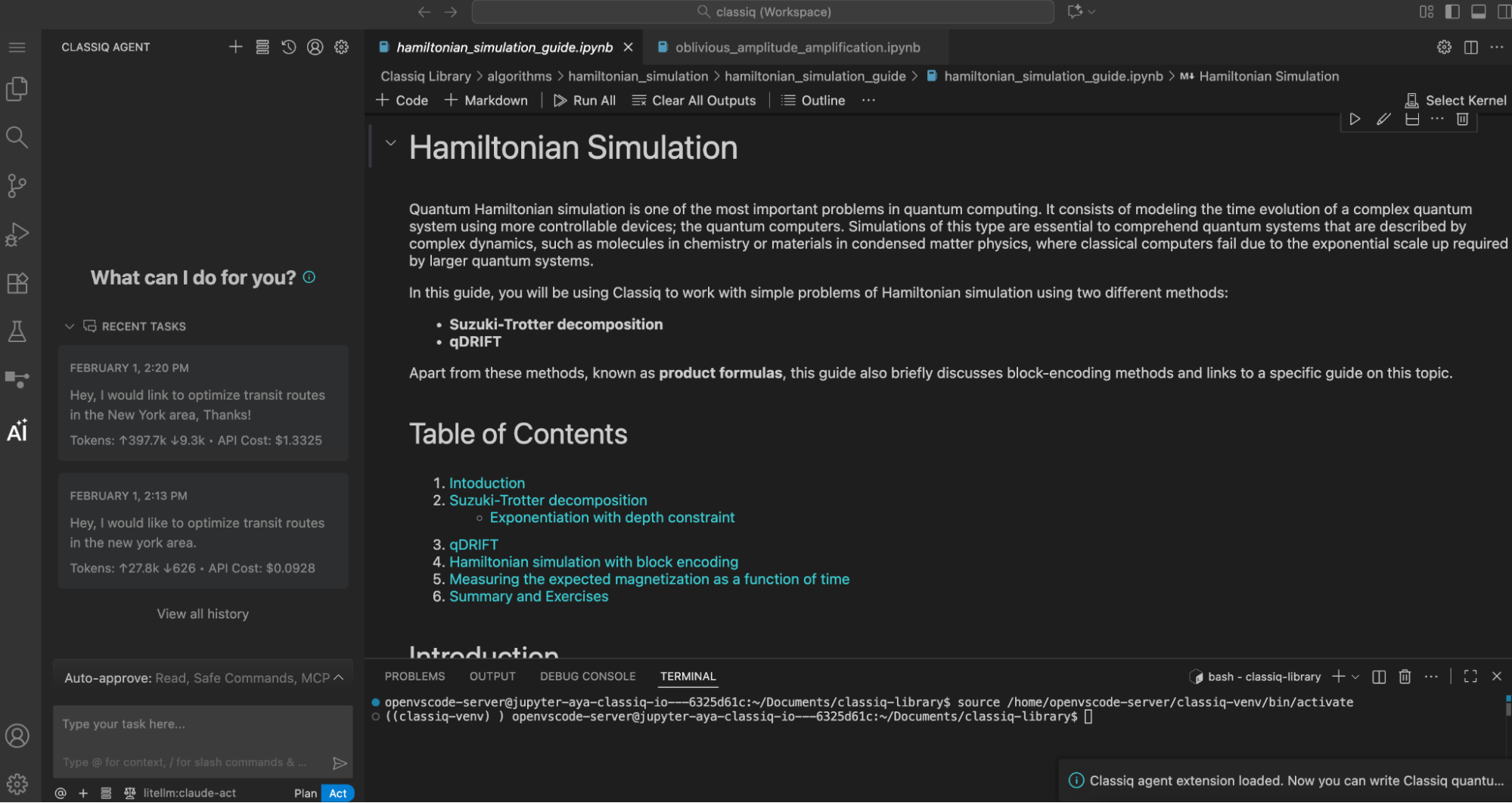
Classiq Studio provides a complete quantum development environment that is ready to use from the start. It is fully web-based, with no installations, no environment management, and no API keys required. Everything needed to design, optimize, visualize, and execute quantum models is pre-installed and integrated.
AI in Classiq Studio is used to guide engineering decisions, not replace them. It helps teams use natural language to explore design options, surface optimizations, and move from intent to execution faster, while keeping the underlying model explicit, inspectable, and under full developer control. Correctness and guarantees remain enforced by the platform, with AI providing guidance rather than hidden automation.
Performance and usability improvements ensure the environment remains responsive as projects grow in size and complexity. The result is a quantum engineering experience that is accessible without being simplified. Teams can move from exploration to deep work quickly, whether they are working independently or collaborating across locations.
Built to Scale Across Teams
Quantum software does not live with a single role. It spans researchers developing algorithms, engineers integrating logic and constraints, and infrastructure teams responsible for execution and operations.
Classiq 1.0 is designed to support that full spectrum. Profile and organization settings, along with platform-wide UX improvements, provide the foundation for collaboration and governance as quantum work moves beyond individuals and into teams.
This focus on organizational scale reflects a simple reality: production quantum software is a team effort. By supporting collaboration, consistency, and shared workflows, Classiq helps organizations move from isolated work to coordinated development, without sacrificing depth or
A New Baseline
Classiq 1.0 marks a clear transition point. Quantum software is moving from experimentation into an engineering discipline, with real expectations around correctness, stability, and scale.
For us, 1.0 is a commitment. A commitment to treating quantum software as something teams can build on, extend, and rely on over time. A commitment to supporting the full path from classical intent to quantum execution. And a commitment to raising the baseline for what production-ready quantum development should look like.
This is the foundation we believe quantum software needs as the field moves forward, and it is the baseline we will continue to build on.
Explore Classiq 1.0
Start building in Classiq Studio
See the full Classiq 1.0 release notes and documentation for detailed changes, examples, and usage guidance.
From Progress to Practice
For years, quantum progress has been measured in qubits, papers, and demos. Hardware has advanced rapidly, but it’s only part of the story. The harder challenge is turning that progress into quantum software teams can actually build, verify, and run.
At Classiq, our customers are showing us every day, quantum computing is entering a new phase. Teams are no longer being asked whether something is theoretically possible. They are being asked to build systems that work under real constraints: correctness, cost, repeatability, and scale. That shift marks the beginning of quantum’s engineering era.
From the start, our vision has been to help organizations turn quantum ideas into real, working software, not stop at isolated experiments. That means moving beyond one-off proofs of concept toward foundations teams can trust, extend, and operate over time.
What “1.0” Means at Classiq
Classiq 1.0 is not a single feature release. It is the point where everything we’ve delivered over recent development cycles comes together into a stable, production-ready baseline.
Over the past years, we introduced major advances across language expressiveness, compiler correctness, execution, visualization, and developer experience. With 1.0, we unify those capabilities, harden them, and stand behind them as a foundation teams can build on with confidence, using AI-driven guidance throughout the platform to help translate intent into correct, optimized quantum models without sacrificing transparency or control.
This release reflects how we see our role in the ecosystem. Classiq 1.0 establishes an engineering baseline for quantum software development, one that prioritizes correctness by default, end-to-end workflows, and long-term stability. It is designed for teams that are serious about building quantum software that lasts.
What Classiq 1.0 Unlocks
Taken together, Classiq 1.0 changes what teams can expect from quantum software development.
Faster progress without sacrificing correctness. Automatic enforcement of core rules removes manual bookkeeping and reduces late-stage surprises.
- Continuity from intent to execution. Work can start with classical logic and domain expertise and carry through modeling, optimization, and execution without rewrites.
- Adaptation as hardware evolves. Models respond to changing hardware constraints while preserving logical intent.
- Execution as part of development. Running, analyzing, and iterating are integrated, not treated as fragile handoffs.
- Transparency at scale. Visibility and inspection make complex quantum programs easier to understand, debug, and explain across teams.
Just as importantly, Classiq 1.0 makes quantum work more repeatable and durable. Instead of one-off programs, teams can build quantum models that are easier to understand, reuse, and evolve over time. That shift supports a move from isolated development toward production-oriented quantum software practices.
This is what production-ready quantum software looks like in practice.
From Classical Logic to Quantum Execution
Quantum software engineering doesn't begin as a quantum problem. It starts with classical logic, domain expertise, constraints, and objectives that already exist inside organizations.
Our vision has always been to bridge that reality with quantum execution. Quantum software engineering means connecting classical problem definitions and control flow directly to quantum models and algorithms, and carrying that intent all the way through optimization and execution on real hardware.
Classiq 1.0 provides a continuous path from classical intent to quantum execution. Classical constructs and control logic are first-class citizens in our platform, not scaffolding that gets discarded along the way. Quantum models remain connected to the logic and constraints that define the problem, even as they adapt to different hardware backends.
This continuity is essential. It allows classical and quantum computing to work together as a single system, and it enables teams to move beyond isolated experiments toward production-oriented quantum development. That is the future we are building toward, and Classiq 1.0 is the baseline that makes it possible.
Correct-by-Construction, Automatically
Production software demands correctness by design. Quantum software is no different, but correctness has traditionally come at a high cost: manual bookkeeping, fragile conventions, and bugs that only surface late in the process.
With Classiq 1.0, we made a deliberate shift. Correctness is enforced at the platform level and handled automatically wherever possible. Uncomputation is applied by default, local variables are cleaned up automatically, and violations are no longer treated as warnings that can be ignored. They are surfaced as hard errors that must be resolved before execution.
This change is not only about being stricter. It is about improving the developer experience. By formalizing uncomputation semantics and enforcing them consistently, Classiq removes an entire class of subtle bugs and manual cleanup work. Developers spend less time reasoning about low-level correctness details and more time focused on the algorithm and the problem it is meant to solve.
The result is quantum software that is safer, more predictable, and easier to evolve over time, without placing additional burden on the developer.
An Expressive Language for Real Problems
As quantum software moves closer to production, the gap between toy examples and real-world problems becomes impossible to ignore. Real problems require classical logic, conditional behavior, structured data, and reusable building blocks.
Classiq 1.0 significantly expands the expressiveness of Qmod to meet those needs. Classical local variables, runtime conditionals, and mid-circuit measurements allow quantum programs to reflect real decision logic. Rich assignment semantics, including arrays and in-place updates, make it possible to work with structured data naturally. Built-in modular arithmetic functions provide core primitives that many algorithms rely on, without forcing teams to reimplement them from scratch.
We also extended quantum functions with generative capabilities. Developers can use familiar Python control flow, leverage third-party libraries, and debug their code in ways that feel natural to modern software development. At the same time, bidirectional conversion between Qmod and QASM ensures interoperability with the broader quantum ecosystem.
Together, these capabilities reduce friction between intent and implementation. Quantum programs become clearer, more maintainable, and better aligned with how engineers actually build software.
Visibility, Transparency, and Debugging
As quantum programs grow in size and complexity, visibility becomes critical. If teams cannot see how a program is structured, how logic flows, or how components interact, trust breaks down and scaling becomes difficult.
Classiq 1.0 introduces deeper transparency across the entire model. Developers can visualize Qmod statements, control structures, and transparent blocks, making it clear how high-level logic maps to the generated quantum program. Variable-level inspection and model-based views provide insight into how data and state evolve throughout execution.
All of this is available directly inside Classiq Studio, connecting high-level intent to low-level realization without forcing developers to jump between tools or representations.
By making quantum programs inspectable rather than opaque, Classiq helps teams debug faster, explain their work more easily, and build confidence in the systems they are creating.
Hardware-Aware Execution Across Simulators and QPUs
As quantum hardware continues to evolve, production software cannot afford to be tightly coupled to a single target. Models need to adapt as hardware changes, without forcing teams to redesign or rewrite their work.
In Classiq 1.0, execution is both hardware-aware and hardware-agnostic by design. When teams switch between simulators, QPUs, or HPC environments, the underlying model updates automatically to reflect the constraints and capabilities of the selected hardware. Optimization adapts transparently, while the logical structure of the model remains intact.
Execution is integrated directly into the development workflow. Teams can run models with a single action, track and limit execution costs, and move between simulators and hardware providers without leaving the platform. GPU-based simulators support hybrid and performance-intensive workflows, while HPC deployments extend execution to large-scale environments.
This approach allows teams to focus on building and improving models, rather than managing hardware-specific rewrites. The same quantum program evolves alongside the hardware it runs on, preserving intent while adapting to reality.
Classiq Studio: Quantum Engineering, Anywhere
Quantum development should not require complex setup, local environments, or fragile configurations before meaningful work can begin.
Classiq Studio provides a complete quantum development environment that is ready to use from the start. It is fully web-based, with no installations, no environment management, and no API keys required. Everything needed to design, optimize, visualize, and execute quantum models is pre-installed and integrated.
AI in Classiq Studio is used to guide engineering decisions, not replace them. It helps teams use natural language to explore design options, surface optimizations, and move from intent to execution faster, while keeping the underlying model explicit, inspectable, and under full developer control. Correctness and guarantees remain enforced by the platform, with AI providing guidance rather than hidden automation.
Performance and usability improvements ensure the environment remains responsive as projects grow in size and complexity. The result is a quantum engineering experience that is accessible without being simplified. Teams can move from exploration to deep work quickly, whether they are working independently or collaborating across locations.
Built to Scale Across Teams
Quantum software does not live with a single role. It spans researchers developing algorithms, engineers integrating logic and constraints, and infrastructure teams responsible for execution and operations.
Classiq 1.0 is designed to support that full spectrum. Profile and organization settings, along with platform-wide UX improvements, provide the foundation for collaboration and governance as quantum work moves beyond individuals and into teams.
This focus on organizational scale reflects a simple reality: production quantum software is a team effort. By supporting collaboration, consistency, and shared workflows, Classiq helps organizations move from isolated work to coordinated development, without sacrificing depth or
A New Baseline
Classiq 1.0 marks a clear transition point. Quantum software is moving from experimentation into an engineering discipline, with real expectations around correctness, stability, and scale.
For us, 1.0 is a commitment. A commitment to treating quantum software as something teams can build on, extend, and rely on over time. A commitment to supporting the full path from classical intent to quantum execution. And a commitment to raising the baseline for what production-ready quantum development should look like.
This is the foundation we believe quantum software needs as the field moves forward, and it is the baseline we will continue to build on.
Explore Classiq 1.0
Start building in Classiq Studio
See the full Classiq 1.0 release notes and documentation for detailed changes, examples, and usage guidance.